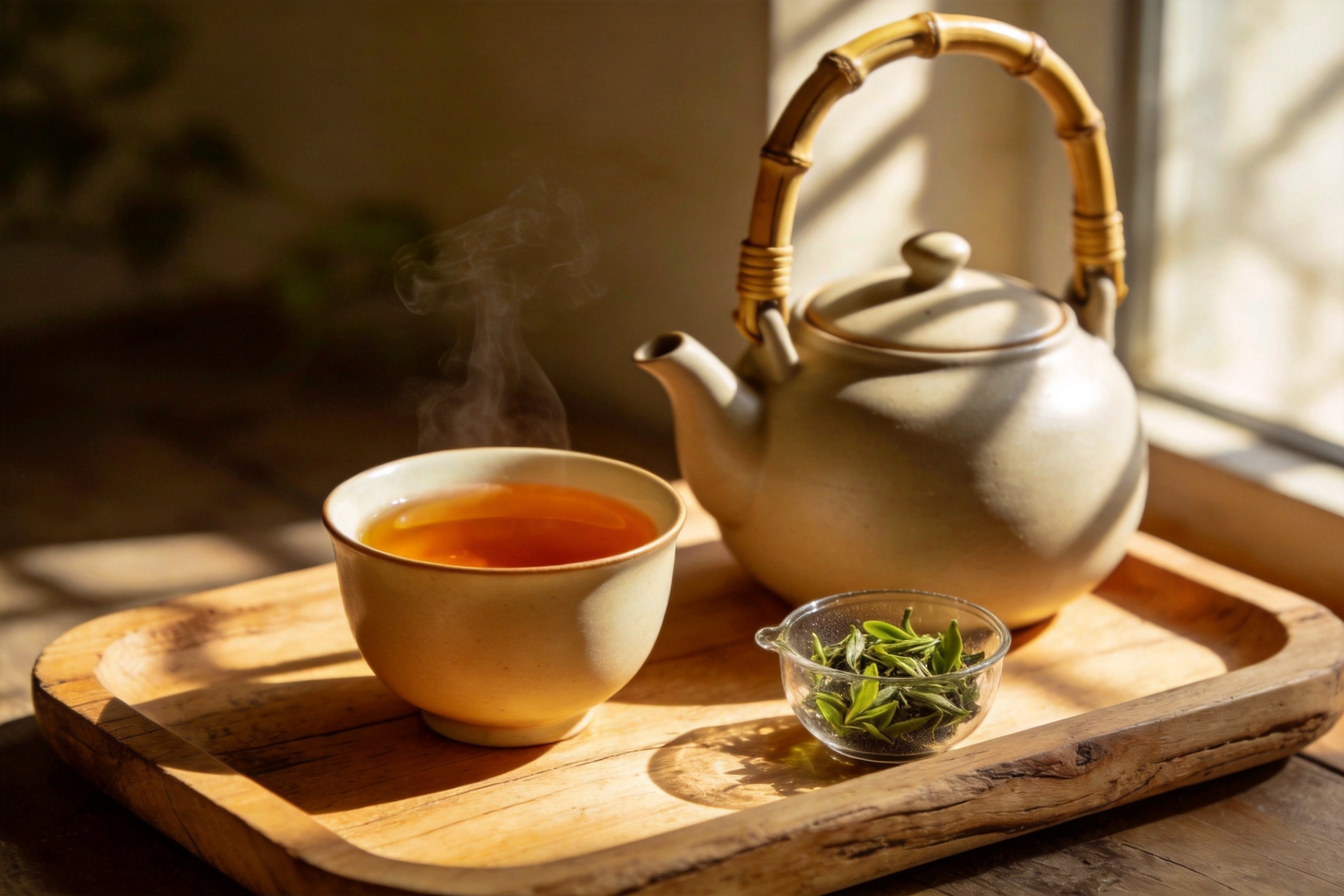
7 Common Tea Brewing Mistakes and How to Fix Them
You bought good loose-leaf tea, followed what seemed like obvious steps, and the cup still tastes bitter, watery, or just… flat. Tea is forgiving, but a handful of common brewing mistakes quietly ruin even premium leaves. The good news: none of the fixes costs money or talent. They are mostly about temperature, proportion, timing, and water. Here are the seven mistakes we see most often — and exactly how to correct each one.
1. Pouring boiling water over delicate tea
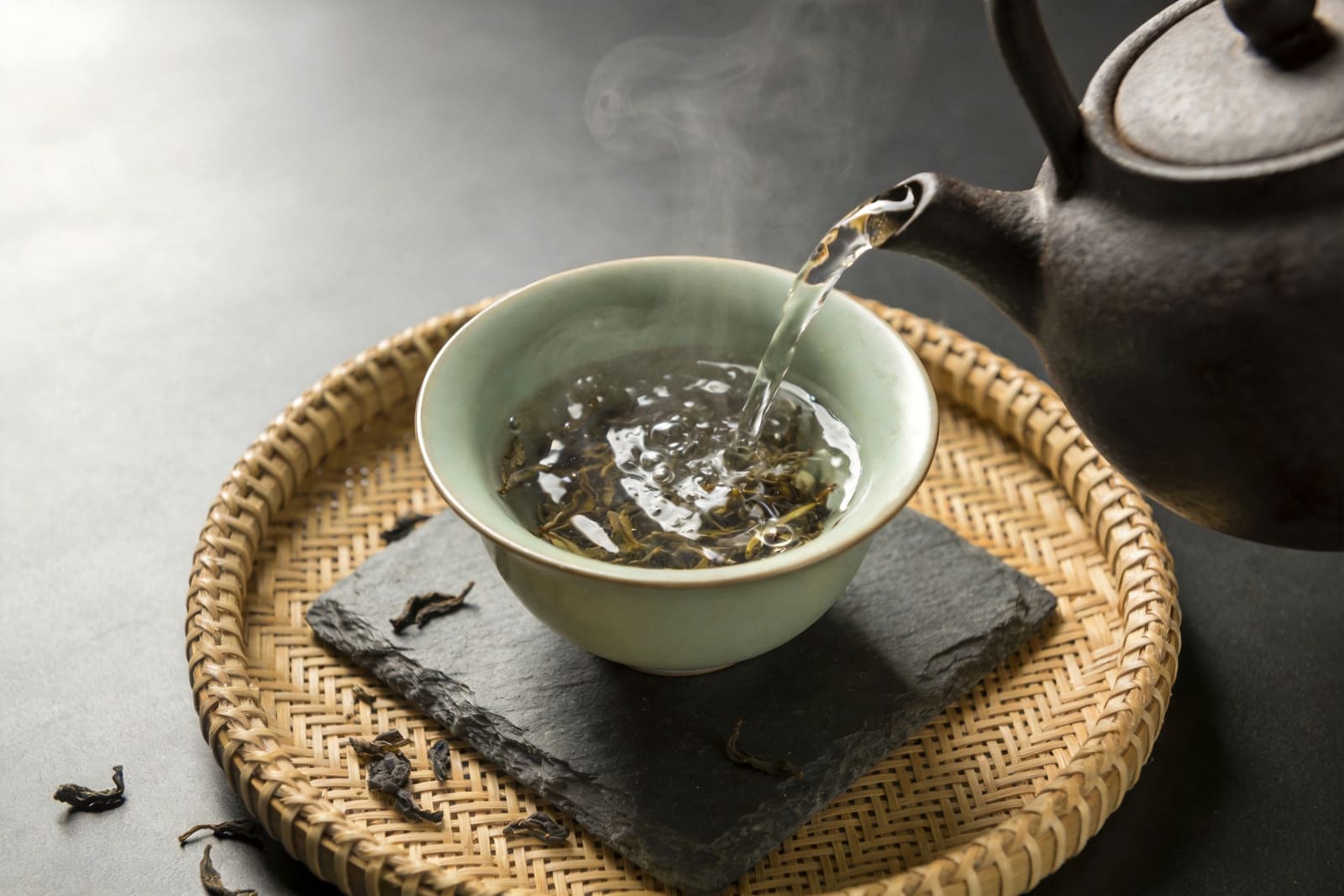
This is the number-one cause of bitter green and white tea. Water straight off a rolling boil scalds the tender leaves, extracting harsh, astringent compounds before the sweet, savory ones can emerge. The fix is simply matching temperature to the tea:
- Green and white teas: around 70–80 °C (160–175 °F)
- Yellow tea and light oolong: around 80–90 °C (175–195 °F)
- Dark oolong, black tea, and pu-erh: 93–100 °C (200–212 °F)
No variable kettle? After the kettle boils, pour the water into an empty cup or fairness pitcher; each transfer drops the temperature a few degrees, and waiting about a minute brings fully boiled water comfortably into green-tea range.
2. Using too little leaf (or too much)
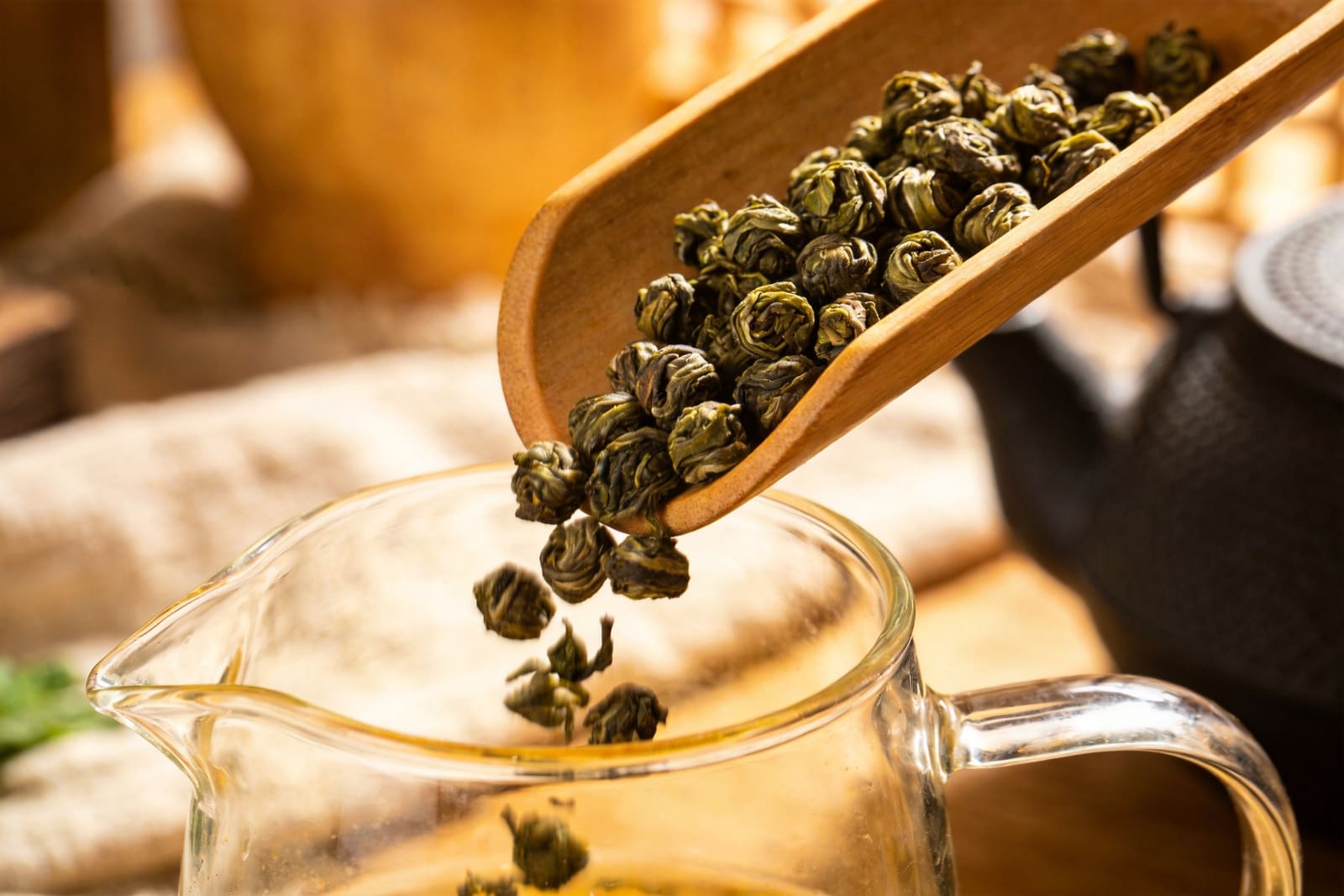
Weak tea is almost always a ratio problem, not a quality problem. For Western-style brewing, a practical starting point is about 2–3 grams of tea — roughly one heaped teaspoon of whole leaves — per 240 ml (8 oz) of water. Dense, twisted leaves compress more than bulky buds, so a kitchen scale removes all guesswork. Traditional gongfu brewing flips the ratio, using lots of leaf with tiny vessels and short infusions. The mistake is staying in between: too little leaf for a big mug, brewed for far too long. Pick one method and commit to it.
3. Steeping for the wrong length of time
Time and temperature are a pair: cooler water tolerates longer steeps; near-boiling water works fast. With Western brewing, most green teas need only 1–3 minutes, white teas 3–4, and black teas 3–5. With gongfu brewing, oolong and pu-erh are infused in seconds rather than minutes, with each round extended a little. If your last cup was bitter, shorten the next steep before you change anything else — over-steeping is the single easiest mistake to reverse.
4. Not separating the leaves from the liquor
Tea keeps extracting as long as leaves and water stay together. Leaving a bag or infuser sitting in your mug while you drink means the last third of that cup is steeped twice as long as the first third — and tastes like it. Decant the full brew into a second vessel (a fairness pitcher, gong dao bei, is traditional), lift the infuser out, or simply remove the bag. Want a second cup? Add fresh water for a fresh infusion instead of letting the first one stew.
5. Brewing with the wrong water
Tea is mostly water, and water that tastes of chlorine, minerals, or nothing will make tea that matches. Tea professionals favor freshly drawn, filtered water with moderate mineral content — enough mineral to carry flavor, not so much that it builds scale and dulls the liquor. Distilled or heavily filtered water makes tea taste thin; very hard water makes it taste flat or murky. Reusing water that has been boiled repeatedly is also worth avoiding: repeated boiling drives off dissolved oxygen, which leaves the liquor tasting lifeless. Start each brew with fresh cold water.
6. Cramming big leaves into a tiny infuser
Whole-leaf teas — especially rolled oolong — swell dramatically as they unfurl, often doubling in size. Packed into a tiny ball infuser or a cramped tea bag, the leaves cannot expand and open, so the water cannot circulate and the brew comes out weak. Give leaves room: a roomy basket infuser, a filter large enough to expand into, or — the most versatile tool of all — a gaiwan or small teapot, which is essentially purpose-built for this.
7. Forgetting the basics of storage and hygiene
Good technique cannot rescue stale or contaminated leaves. Tea absorbs moisture, light, heat, and kitchen odors, which is why an open paper bag near the stove ages months in weeks. Keep tea in an opaque, airtight container in a cool, dark cupboard, away from spices and coffee — and for the details on how long each type actually lasts, see our tea storage and shelf-life guide. On the equipment side, rinse your teaware promptly and let it air-dry; soap residue and old tannins will flavor every future cup. Our tea ware care guide walks through the routine.
The 60-second perfect-cup routine
- Warm the vessel — swirl in hot water and discard, so the brew temperature stays stable.
- Weigh or measure the leaf — 2–3 g per 240 ml for Western brewing.
- Heat to the right temperature — cooler for green and white, near boiling for black and pu-erh.
- Pour and time it — 1–5 minutes Western style; seconds for gongfu infusions.
- Separate all the liquor from the leaves when time is up.
- Taste before adding anything, then adjust the next round: shorter for bitterness, longer or warmer for weakness.
Run this for a week and your everyday tea will improve more than any expensive upgrade could manage.
Frequently asked questions
Why does my tea taste bitter?
Usually the water is too hot or the leaves steeped too long, especially with green and white teas. Use water at 70–80 °C and shorten the next steep. Overly hard or heavily chlorinated water and using far too much leaf can also add harshness.
Can I steep the same tea leaves more than once?
Yes — whole-leaf oolong, pu-erh, white tea, and many green teas are designed for multiple infusions, particularly with gongfu brewing. Simply add fresh hot water and extend each successive steep slightly. Tea bags with broken fannings generally give only one good cup.
Should I rinse tea leaves before brewing?
A quick rinse — pouring hot water over the leaves and immediately discarding it — is standard for pu-erh and tightly rolled oolongs: it wakes and opens the leaves and washes away dust from aged cakes. It is optional for delicate green and white teas, where the first infusion is often the finest.
Does bottled or filtered water make better tea?
Fresh filtered water with moderate minerals generally gives the cleanest cup. Avoid distilled or heavily demineralized water, which produces thin-tasting tea, and very hard or chlorinated tap water, which mutes flavor.
Is over-steeped tea unhealthy?
No — over-steeped tea simply contains more of the naturally bitter and astringent compounds, so it tastes harsh and may upset a sensitive stomach. It is a flavor problem, not a safety one.
Key takeaways
- Match water temperature to the tea — boiling water is for black and pu-erh, not green and white.
- Start with 2–3 g of leaf per 240 ml, then adjust by taste.
- Stop the steep on time and always separate leaves from liquor.
- Use fresh filtered water, give whole leaves room to expand, and keep both tea and teaware clean.
Which of these seven habits has been quietly spoiling your tea — and did fixing it change the cup? Share your result in the comments.
Comments (0)