Tea Water Temperature Guide: Chart, Times & Visual Cues
Water temperature is the single variable that changes a cup most: a few degrees can be the difference between sweet and brisk, or fragrant and bitter. This guide covers practical starting temperatures and steep times for every tea family, explains what heat actually does to the leaf, and shows how traditional visual cues line up with the chemistry.
The Science of Tea Extraction and Temperature
When hot water meets tea leaves, extraction begins immediately. Brewing studies in the Chinese journal Tea Science show that moving from warm water to a boil markedly raises how much of each compound enters the cup: polyphenols and caffeine rise steeply, and amino acids rise more modestly. In other words, heat is the main lever that unlocks the contents of the leaf.
However, more heat does not always mean better results for every compound. Studies by Banerjee and Chatterjee (2014) and Saklar et al. (2015) indicate that lower temperatures are generally recommended for extracting antioxidants from green tea. Their research suggests that temperatures approaching boiling can destroy delicate polyphenols and decrease the overall sensory properties of the infusion. This delicate balance ensures that the brewer can extract the desired flavor compounds without overwhelming the palate with astringency, highlighting a critical threshold where excessive heat may degrade the very compounds tea drinkers seek.
Heat also changes which catechins survive. Research in the Journal of the Science of Food and Agriculture describes how catechins such as EGCG, EGC and ECG can epimerize into other isomers during brewing, with moderate temperatures around 80 °C (175 °F) favoring higher EGCG and ECG levels than a rolling boil. A separate sensory study found green tea brewed at 85 °C for about three minutes scored highest while retaining the most EGCG. The exact optimum varies, but the direction is consistent: green tea does not need boiling water.
Temperature Guidelines for Different Tea Categories
Each of the six families of tea responds to heat differently, mostly because of how the leaves were processed. True oxidation means the enzymatic browning that happens during manufacture, not during storage or brewing; yellow tea gets its character from a separate, non-enzymatic smothering step called men huang. Leaf maturity and how much the cells were broken during processing also determine how quickly a tea releases its contents. Here are practical starting points:
表格
| Tea family | Water temperature | First steep | Why this range |
|---|---|---|---|
| Green & yellow tea | 70–80 °C / 160–175 °F | 1–3 min | Protects delicate catechins and avoids grassy bitterness |
| White tea | 75–85 °C / 170–185 °F | 2–4 min | Young buds need gentler heat; aged white tea can take hotter water |
| Light oolong (jade, Tieguanyin) | 85–95 °C / 185–205 °F | 30–60 s (gaiwan, multiple steeps) | Opens tightly rolled leaves without stewing the floral notes |
| Dark oolong & black tea (hong cha) | 95–100 °C / 205–212 °F | 3–5 min | Fully built leaves need near-boiling water for body and aroma |
| Pu-erh & dark tea | 100 °C / 212 °F (often rinsed first) | Quick rinse, then 20 s and up | Boiling water wakes compressed, post-fermented leaves |
| Herbal tisanes | 100 °C / 212 °F | 5–10 min | Most herbs, flowers and spices need a boil to extract fully |
These are starting points, not rules: turn the temperature down if a tea tastes harsh or bitter, and up if it tastes thin or weak. Whole-leaf teas in a gaiwan are usually rinsed and then steeped for seconds, while the same leaf in a large mug needs minutes.
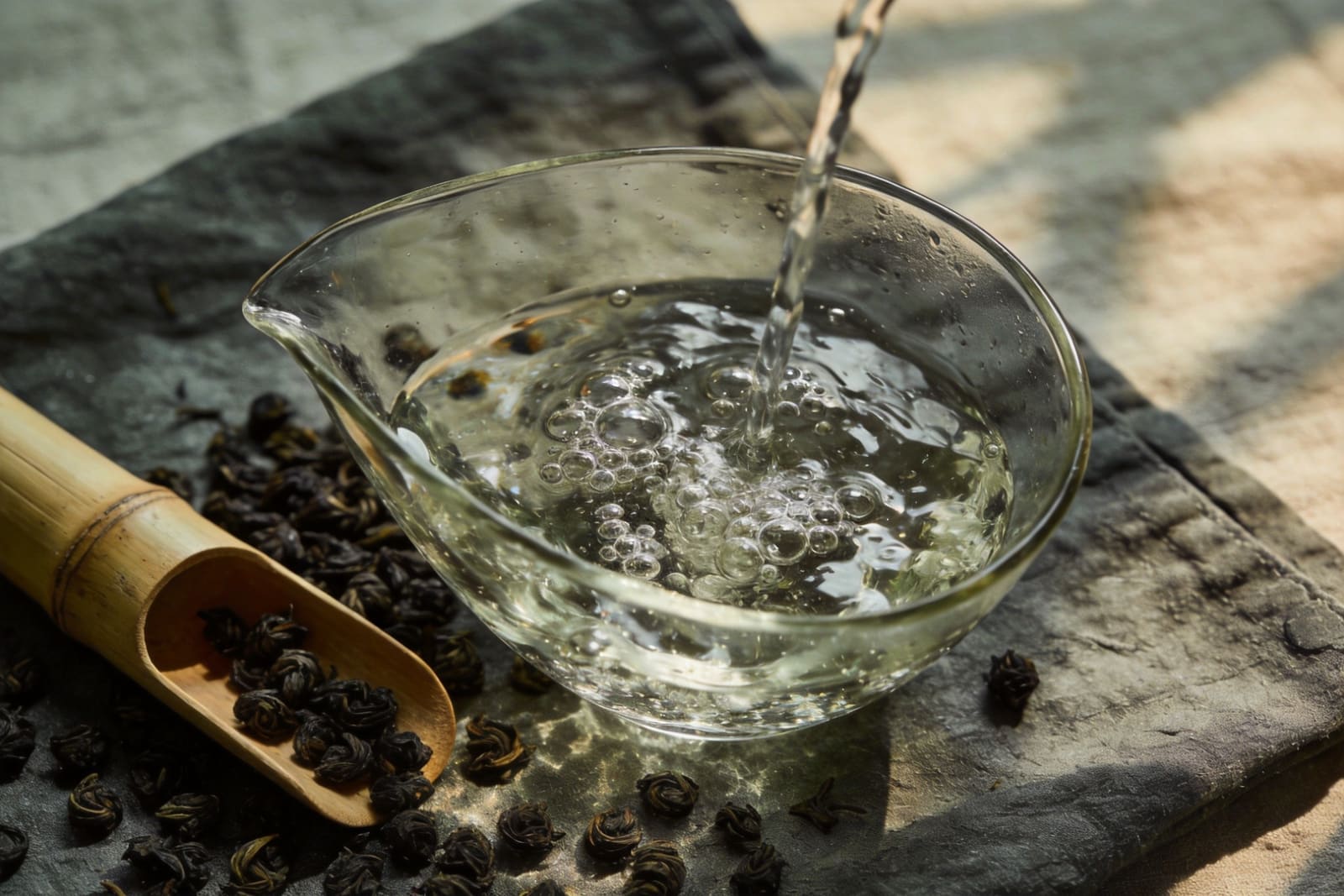
For heavily processed and aged teas, higher temperatures are often necessary. Research by Jin Enhui in Tea Science found that during the brewing of oolong and pu-erh teas, soluble substance extraction rises to a saturation point and then levels off. Based on sensory evaluation, the recommended brewing temperature for these robust teas is boiling. This is particularly relevant for pu-erh, which undergoes post-fermentation driven by microbial activity. The boiling water helps to fully extract the complex, earthy flavors developed through this microbial process, and the same applies to fully oxidized black tea.
You may notice an apparent contradiction with the green-tea advice above. A 2023 laboratory study in the journal Antioxidants (PMID 37049793), which measured compounds by HPLC across 5 minutes to 12 hours, found that total analytical recovery of antioxidants peaked at 100 °C after up to two hours. That is an extraction experiment, not a brewing recipe: it answers how much chemistry can be pulled out of a leaf, not how the drink tastes. A real cup brewed in minutes near boiling extracts fast but can turn bitter, and catechins begin to epimerize or degrade with prolonged heat. For drinking, use the chart above; reserve the two-hour figure for understanding the science, not the kettle.
The Rise of Cold Brewing and Visual Cues
Cold brewing (leaves left in cold or room-temperature water for hours, often overnight) works by slow diffusion rather than heat. Studies comparing the two methods, including work reviewed by Ramalho et al., consistently find lower caffeine in cold infusions and a smoother, less bitter and astringent cup. Extraction of caffeine, catechins and gallic acid starts low and climbs gradually over the long steep, so cold brew is not caffeine-free—it simply trades speed for mildness. Many drinkers also find it sweeter and more aromatic, though that part is palate-dependent.
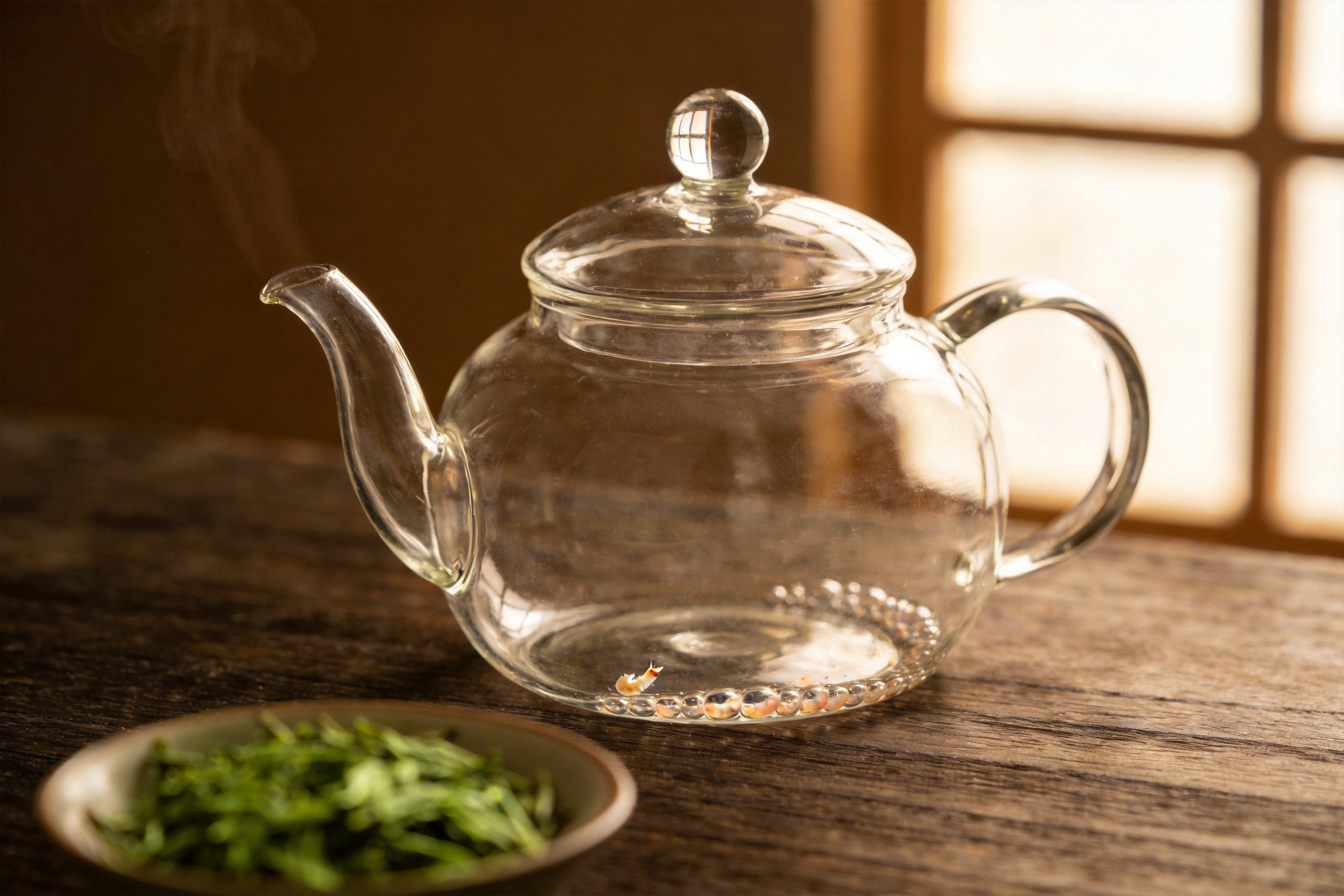
While scientific literature provides clear chemical thresholds, many tea enthusiasts rely on traditional visual cues to judge water temperature. These cues often involve observing the size and behavior of bubbles in the water, such as crab eye or fish eye boils. While numerous commercial tea guides publish specific steeping time charts and visual cues for water temperature, these precise culinary parameters vary widely by source. Importantly, they are not standardized in peer-reviewed literature, which instead focuses on chemical extraction thresholds, such as maintaining moderate heat to prevent catechin epimerization or avoiding near-boiling temperatures to prevent green tea polyphenol degradation. Knowing these limits is also the best way to avoid the most common tea brewing mistakes.
Managing Tea Chemistry Through Precise Heating
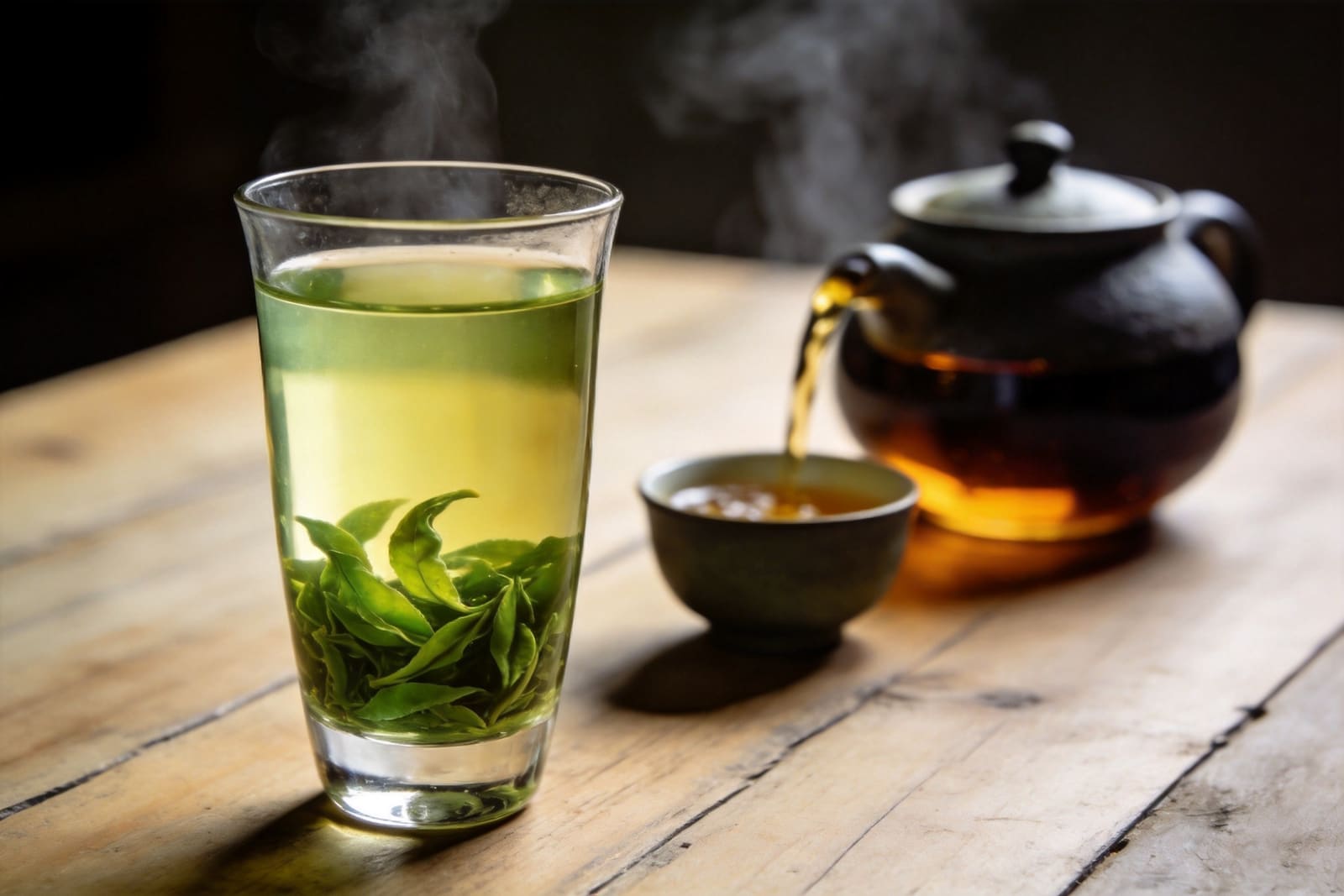
Temperature works together with leaf amount and time: the three are easiest to adjust one at a time. Once you know the rough range a tea wants, a thermometer—or reading the bubbles—removes most of the guesswork. Pre-warming the pot or gaiwan also keeps the water temperature from dropping the moment it hits cold porcelain, so the leaves brew at the heat you intended.
Frequently asked questions
**What is the best water temperature for brewing green tea?**Aim for roughly 75–85 °C (170–185 °F). At this range EGCG and other catechins extract well with less epimerization, and the cup is less bitter than at a boil. A sensory study rated 85 °C at about three minutes highest for Turkish green tea, but your own leaf and palate are the final guide.
**Does cold brewing tea actually reduce caffeine and bitterness?**Yes, studies indicate that cold water steeping results in lower caffeine extraction and reduced bitterness compared to hot water brewing. Research by Lin et al. and Liao et al. shows that while the initial infusion rates of certain compounds are lower, the method yields a smoother, more aromatic cup, making it a great option for those looking to minimize bitter flavors.
**Why do commercial tea temperature charts vary so much from scientific recommendations?**Commercial charts often rely on traditional visual cues and culinary parameters that vary widely by source and are not standardized in peer-reviewed literature. Scientific literature, on the other hand, focuses on precise chemical extraction thresholds, such as specific temperatures required to prevent catechin degradation or maximize antioxidant yield, leading to differences between traditional guides and scientific findings.
**How long should I brew tea to maximize antioxidants without degrading them?**Do not brew tea for an hour or two at home to chase antioxidants—that figure comes from a 2023 laboratory extraction study (Antioxidants, PMID 37049793) measuring maximum chemical recovery at 100 °C, not a drinking recommendation. For an actual cup, steeping in the chart ranges for minutes gives nearly all the flavor and most of the compounds without the bitterness, astringency and catechin changes that come with prolonged boiling.
Key Takeaways
- Temperature Dictates Extraction: Increasing the water temperature from warm to boiling significantly increases the extraction rates of tea polyphenols, caffeine, and amino acids, according to research in Tea Science.
- Moderate Heat Suits Green Tea: Roughly 75–85 °C keeps catechins intact and bitterness down; the exact optimum varies by leaf.
- Boiling Water for Robust Teas: Oolong and pu-erh teas, including those undergoing microbial post-fermentation, require boiling water to reach the saturation point of soluble substance extraction.
- Cold Brewing for Smoothness: Steeping tea in cold water yields lower caffeine, less bitterness, and higher aroma, though the extraction of certain compounds takes longer.
- Visual Cues Help, a Thermometer Is Better: Traditional bubble stages (shrimp eyes, string of pearls, rolling boil) are useful approximations, but the stages are not standardized across sources.
Comments (0)