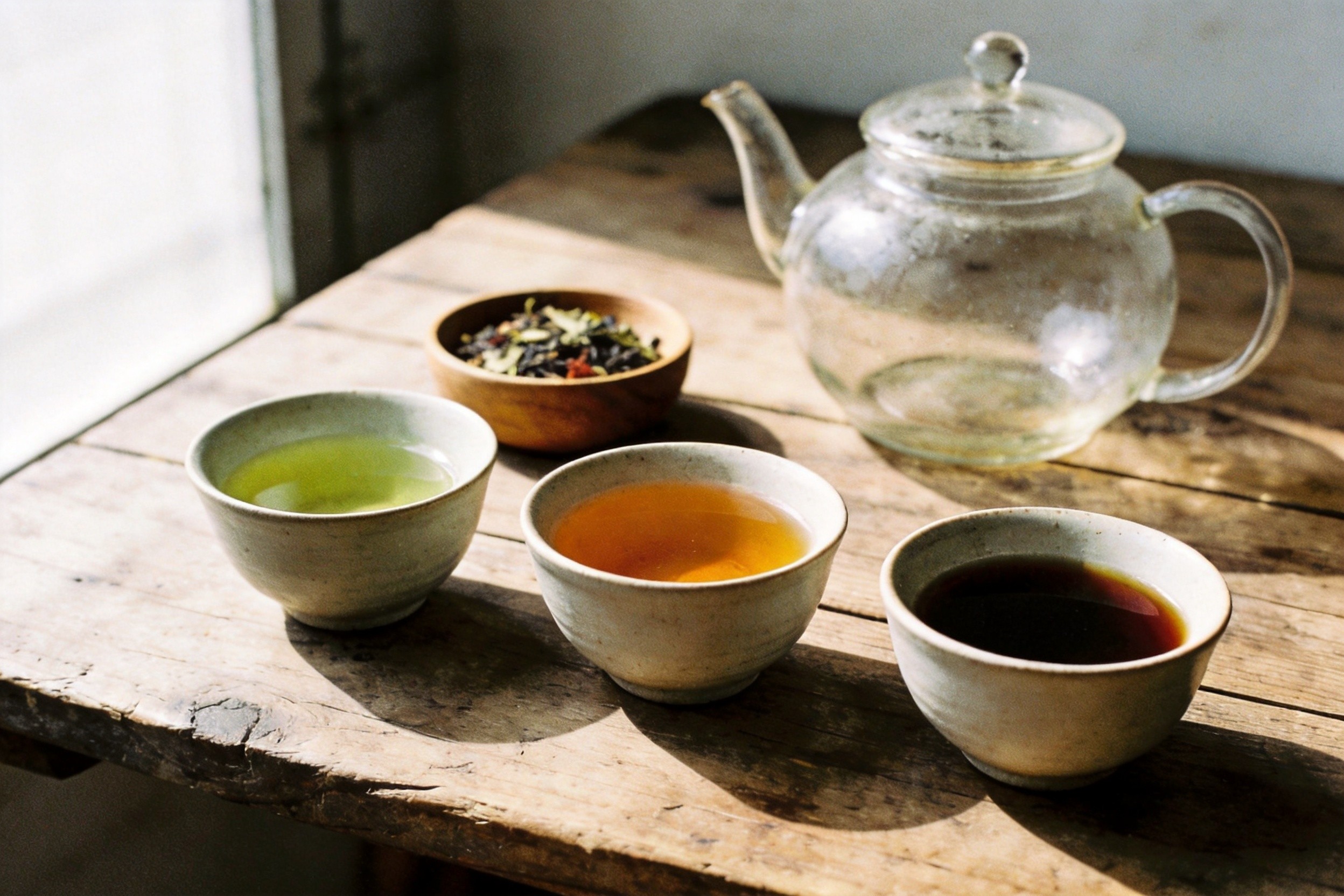
How Much Caffeine Is in Tea? By Type and How You Brew
When exploring the world of Camellia sinensis, one of the most common questions enthusiasts and casual drinkers alike ask is: how much caffeine in tea? Unlike a simple cup of coffee, the caffeine content in tea is highly variable and influenced by a complex interplay of agricultural, chemical, and preparation factors. Understanding these variables is essential for managing your daily intake and optimizing your brewing routine. Research suggests that there is no single definitive answer, as the final concentration in your cup depends heavily on the specific tea type, the processing methods it undergoes, and how you choose to brew it.
Baseline Caffeine Levels in Commercial Teas
To understand how much caffeine in tea, we must first look at the baseline concentrations found in the leaves and the resulting infusions. A comprehensive 2008 study published in the Journal of Analytical Toxicology by Chin et al. analyzed twenty commercial tea products to determine these baseline levels. The researchers found that caffeine concentrations in white, green, and black teas ranged from the mid-teens to around sixty milligrams per standard six- to eight-ounce serving. Interestingly, the study noted no observable trend linking caffeine concentration strictly to the specific variety of tea, highlighting the wide natural variance.
The same research by Chin et al. determined that decaffeinated teas still contain trace amounts, typically less than a dozen milligrams per serving, while purely herbal teas contain no detectable caffeine. When analyzing the raw leaf material itself, an analysis by Tfouni et al. found that mate tea presented the lowest caffeine levels, ranging from the single digits to the low teens of milligrams per gram. In contrast, Camellia sinensis teas ranged higher: white tea fell in the low twenties to low thirties, green tea in the high teens to mid-twenties, and black tea in the mid-teens to mid-thirties of milligrams per gram.
The Impact of Enzymatic Browning and Processing
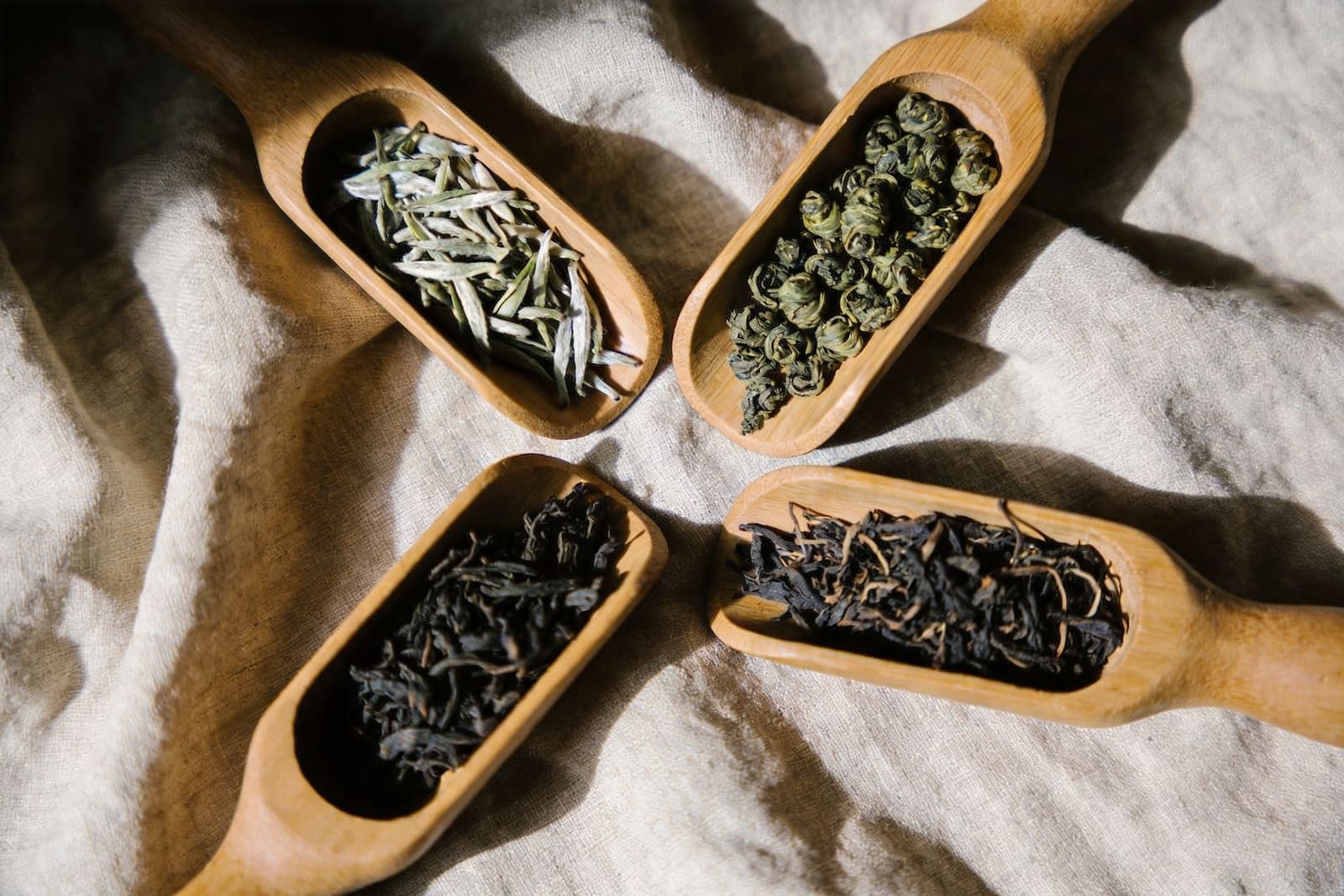
The processing of tea leaves significantly alters their chemical composition, but it is crucial to use precise terminology when discussing these changes. What is commonly referred to as oxidation in the tea industry is scientifically known as enzymatic browning. It is also important to distinguish this from the microbial activity involved in post-fermentation, which is specific to dark teas like Pu-erh, and the non-enzymatic browning that characterizes yellow tea.
One often-cited laboratory analysis by Hilal and Engelhardt measured unusually high caffeine in a white-tea sample, at times close to double that of some green teas. That result comes from a limited set of samples and is not universal: the 2008 Chin et al. study found white, green and black teas all fell within the same 14–61 mg range with no consistent trend by type. The safer takeaway is that leaf age and the specific sample matter more than tea color—white teas made largely from young buds can run high, while the common belief that darker tea always means more caffeine is not reliable.
Furthermore, processing can actively increase caffeine levels. A study by Wang, Hu, Wan, and Pan demonstrated that caffeine content in tea leaves can increase after microbial treatment, such as the pile-fermentation process used for dark teas. Additionally, a chromatographic study published in the journal Foods found that black tea and yellow tea—which undergoes non-enzymatic browning rather than enzymatic browning—yielded the highest caffeine levels in their infusions, significantly higher than green, white, and oolong teas. Pu-erh tea was found to be comparable to black tea in this regard. For a deeper dive into how different processing methods define tea categories, you can explore our guide on the six families of tea.
How Brewing Conditions Alter Caffeine Extraction
The leaves themselves are only half the story; the brewing method dictates how much of that caffeine actually ends up in your cup. The transference rate of caffeine from the dry leaves to the liquid infusion is not absolute. According to the study by Tfouni et al., this transference rate varies widely, generally falling between roughly half and over four-fifths of the total caffeine present in the leaves.
A study by Horzic et al. evaluating household brewing conditions with water temperatures between 80°C and 100°C found that caffeine concentrations in the final infusions followed a specific order: oolong was the lowest, followed by black, white, and green tea yielding the highest concentrations. However, the physical form of the tea also matters. The Foods journal study noted that cup-sized tea bags yielded notably higher caffeine compared to loose-leaf preparations, likely due to the increased surface area of the broken leaves in tea bags. If you are using loose leaf, understanding the right vessel is key; our comparison of a gaiwan vs teapot can help you optimize your setup.
Time is perhaps the most critical variable. The 2008 study by Chin et al. noted that longer steep-times consistently increase the caffeine content in the brewed tea. The Foods journal research corroborated this, finding that extending the brewing time significantly raised caffeine levels, with some teas reaching over fifty milligrams per standard cup when steeped for ten minutes.
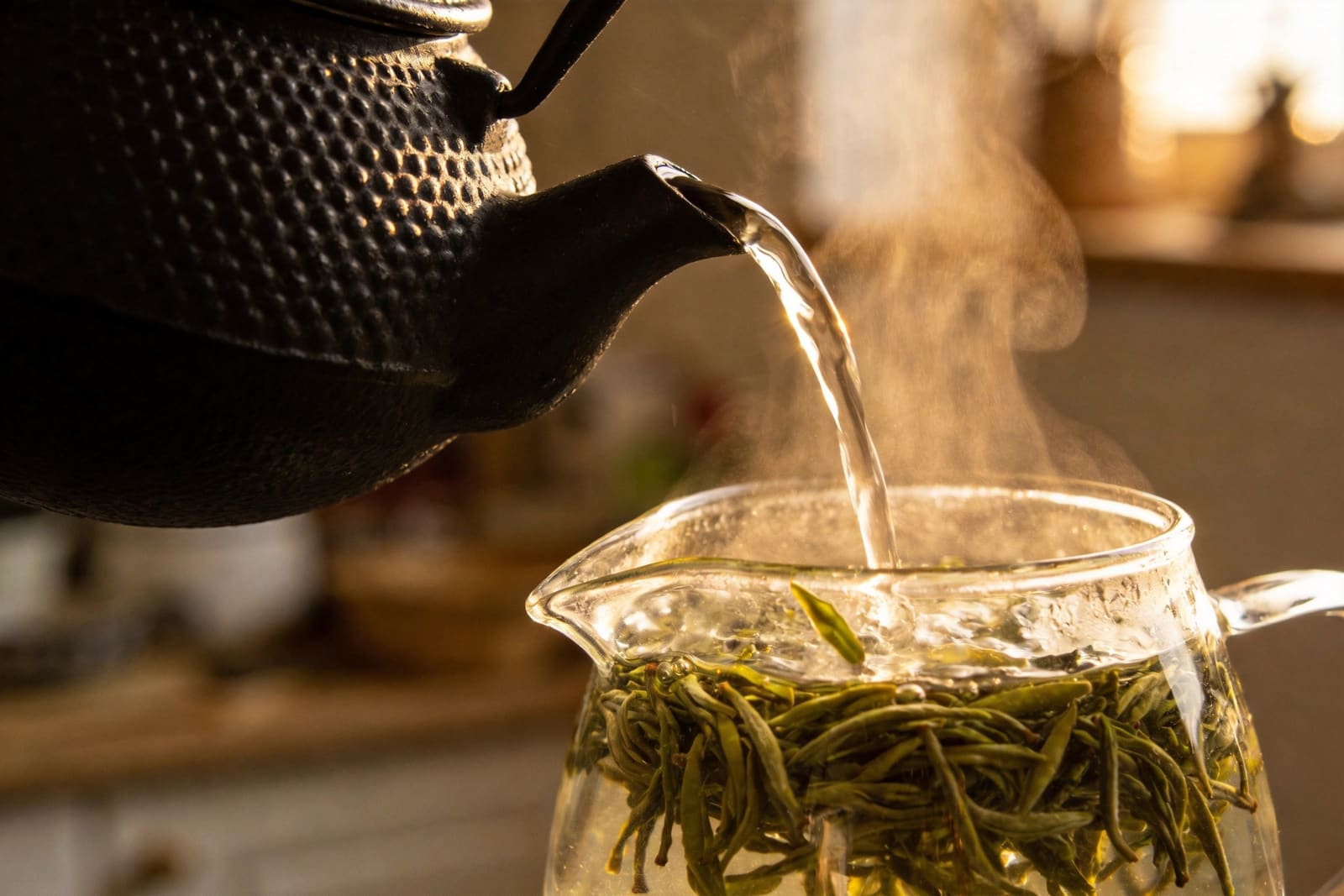
What happens when you re-steep your leaves? Follow-up infusions generally contain substantially less caffeine than the first, since a large share extracts early; in the Horzic et al. household-brewing tests the second infusion was often around half of the first, and later brews lower still. Exact numbers vary with the leaf and each steep, so treat this as a rough pattern rather than a rule. A quick rinse, or simply drinking the second or third infusion, is a practical way to enjoy flavor with less caffeine if you are sensitive—but it is not a reliable way to remove caffeine entirely. Avoiding common tea brewing mistakes also helps you control extraction.
Special Preparations and Daily Safety Limits
Matcha deserves separate treatment because you consume the whole powdered leaf rather than an infusion. A review in Molecules (Kochman et al., 2021) reports matcha at roughly 19–44 mg of caffeine per gram of powder, so a typical 2 g bowl lands around 38–88 mg—often close to a cup of filter coffee, depending on dose, cultivar and shading. That wide range is exactly why a single confident matcha figure is misleading.
Understanding your daily limits is crucial for safe consumption. Health authorities such as the U.S. Food and Drug Administration (FDA) and the European Food Safety Authority (EFSA) consider up to four hundred milligrams of caffeine per day to be within safe limits for healthy adults. According to the Assessment of Dietary Caffeine Intake Level and Its Risk for Chinese Residents by China’s National Center for Food Safety Risk Assessment, tea and tea beverages are the main sources of dietary caffeine for Chinese consumers, with tea leaves contributing nearly three-quarters to the intake of adults. The Center recommends the same safe limit of four hundred milligrams per day for healthy adults, while advising a much lower threshold of around one hundred and seventy-five milligrams per day for minors under eighteen.
Frequently asked questions
**Does steeping tea for a longer time increase the caffeine content?**Yes. Research by Chin et al. and studies published in the Foods journal consistently demonstrate that extending the steeping time allows for greater caffeine extraction from the leaves into the water, significantly raising the final caffeine concentration in your cup.
**Is decaffeinated tea completely free of caffeine?**No. The 2008 study by Chin et al. found that while herbal teas contain no detectable caffeine, decaffeinated teas still contain trace amounts, typically less than a dozen milligrams per serving.
**Which type of tea generally has the highest caffeine in the cup?**It depends on the study and brewing method. Horzic et al. found that green tea infusions yielded the highest concentrations under household brewing, while the Foods journal study found that black and yellow teas had the highest levels. Ultimately, brewing time and leaf surface area play a larger role than the tea type itself.
**Does re-steeping tea remove the caffeine?**It reduces it meaningfully but does not remove it. Follow-up infusions generally contain substantially less caffeine than the first; in one household-brewing study the second was often around half of the first, with later steeps lower still. The exact drop varies with the leaf and steeping time.
Key Takeaways
- Caffeine levels vary widely: Studies show that caffeine in commercial teas can range from the mid-teens to around sixty milligrams per serving, with no strict rule linking it solely to tea color or variety.
- Tea color is not a reliable caffeine ranking: Lab data put white, green and black teas in roughly the same wide range; bud-heavy whites can run high, and the specific leaf and sample matter more than color.
- Brewing dictates extraction: Longer steeping times, higher water temperatures, and the use of tea bags (which have more surface area) significantly increase the caffeine extracted into your cup.
- Later steeps have less caffeine: Follow-up infusions usually contain substantially less than the first, though the exact amount varies.
- Matcha is concentrated because you drink the whole leaf: Published analyses put it at roughly 19–44 mg per gram, so a typical 2 g bowl is about 38–88 mg.
- Safe daily limits apply: Major health authorities recommend a maximum of four hundred milligrams of caffeine daily for healthy adults, with significantly lower limits for minors.
Disclaimer: This article is for general informational purposes only and is not a substitute for professional medical advice, diagnosis, or treatment. Always consult a qualified healthcare provider before changing your diet—especially during pregnancy or nursing (guidance bodies such as the ACOG and EFSA advise limiting caffeine to about 200 mg per day in pregnancy), if you take medication, or if you have caffeine sensitivity or a heart condition.
Comments (0)