What Is Oolong Tea? Styles, Flavors, and How to Brew
Oolong is a partially oxidized tea made from Camellia sinensis, sitting between the fresh grassiness of green tea and the deep maltiness of fully oxidized black tea (called hong cha in Chinese). It covers an unusually wide flavor spectrum, from light and floral to dark, roasted and creamy. What unifies the category is not a single taste but a shared, skill-intensive processing style that lets makers create very different sensory experiences from the same plant.
The Science of Oolong Oxidation
Oxidation is the process that separates the families of true tea, and oolong occupies the middle ground.
The Linus Pauling Institute at Oregon State University explains that oolong teas are allowed to oxidize more than white or green teas, but for less time than black teas, before being heated and dried to halt enzymatic activity. It is important to note that this is strictly enzymatic browning, which is entirely distinct from the microbial post-fermentation seen in dark teas.
According to presentation slides from the Northwest Tea Festival, oolong is typically produced from medium to large-leaf tea varieties. These plants feature larger, thicker leaves with a tougher cuticle, making them highly resistant to the rigorous and lengthy processing required to develop the tea’s signature character.
Terroir and Cultivar Influence
Core producing regions include high-mountain areas such as Wuyi Mountain in northern Fujian, Anxi in southern Fujian, Fenghuang Mountain in Guangdong, and Alishan in Taiwan. The Northwest Tea Festival notes that misty clouds and large temperature swings in these areas slow leaf growth, resulting in tender, thick leaves rich in aroma.
A study on six oolong tea cultivars published via Semantic Scholar and PMC found that high-altitude cultivation significantly enhanced umami, sweetness, and floral intensity. High-altitude samples showed higher levels of free amino acids, polyphenols, and soluble sugar, alongside elevated floral monoterpenes like linalool, linalool oxide II, and geraniol.
Furthermore, a 2025 study by Lei et al. in Beverage Plant Research found that oolong cultivars contain more esters, which shape floral and fruity aromas. This research highlighted that these teas require mature leaves with sufficient substances to develop their rich flavor profiles.
The Flavor Spectrum: Roasted vs. Unroasted
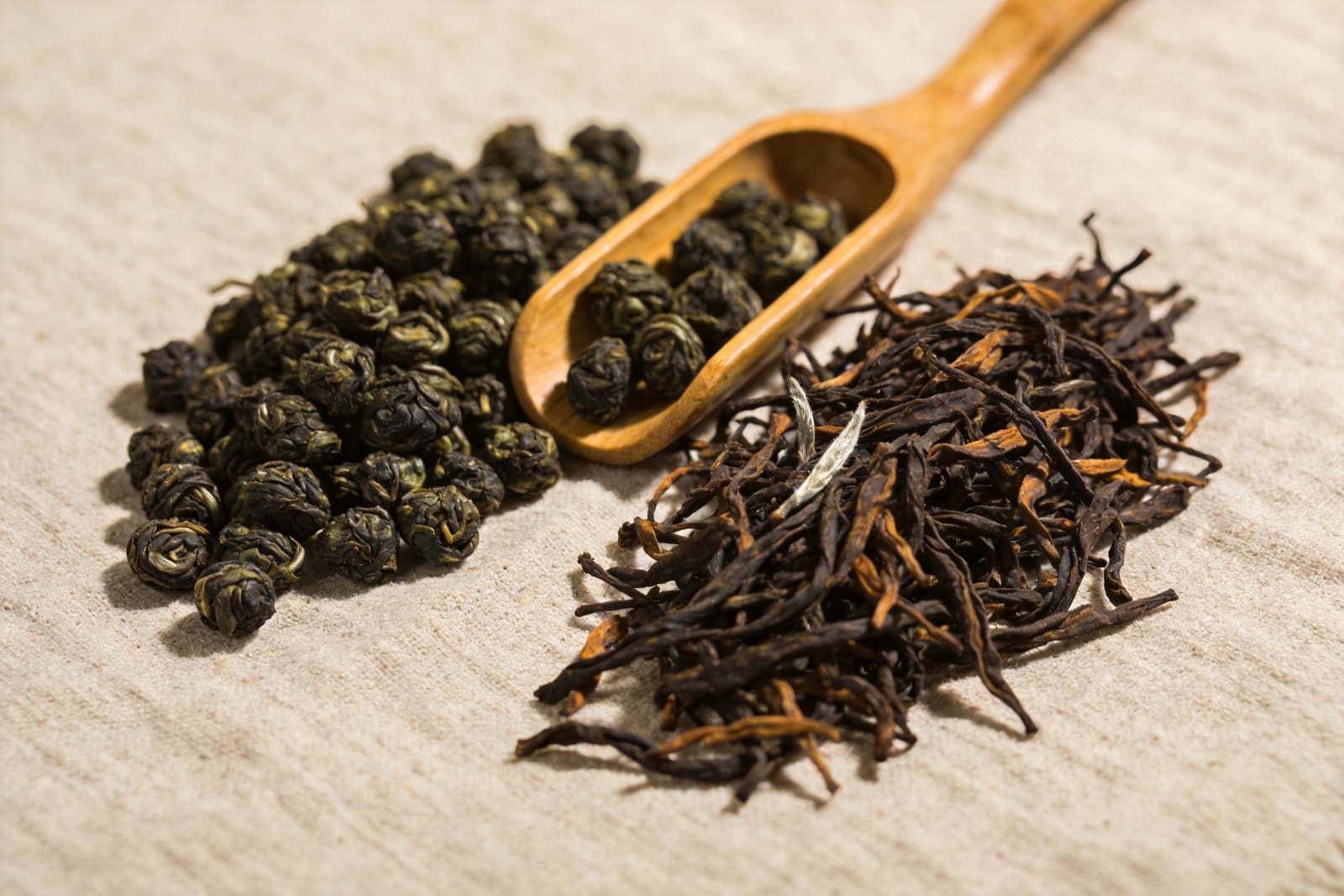
The flavor of oolong is incredibly diverse, largely influenced by oxidation levels and roasting. A study analyzing 153 roasted and unroasted oolong tea samples via Semantic Scholar found that roasting significantly increased the variety of volatile compounds. Unroasted teas exhibited more fresh and green flavors, while roasted teas scored higher in pungent and caramel notes.
The same volatile fingerprint study identified specific characteristic volatiles for different regional styles. High Mountain oolongs are marked by linalool and geraniol. Tieguanyin features (E)-nerolidol, jasmin lactone, benzeneacetaldehyde, and 4-methyl benzaldehyde oxime. Meanwhile, Dongding oolong is characterized by specific pyrazines and pyrroles, giving it a distinct roasted depth.
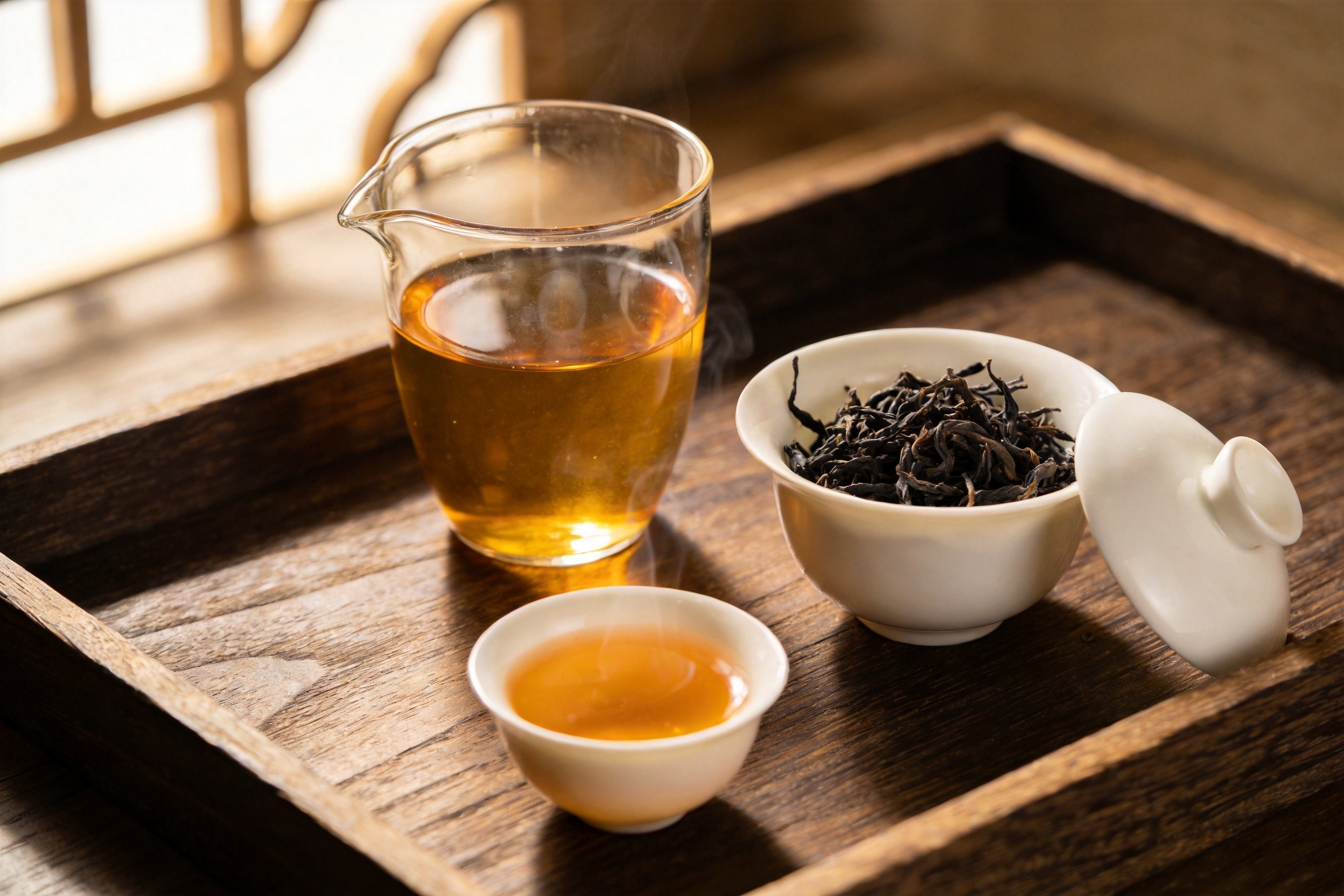
Choosing the right vessel also matters: a small porcelain gaiwan suits light, rolled oolongs, while a clay teapot is the classic choice for dark roasted leaves, both helping the aromatics concentrate.
How Oolong Is Made: Traditional Steps
Oolong processing is one of the most labor-intensive workflows in tea. In a traditional workshop the leaves move through a repeating cycle of bruising and resting:
- Withering: Freshly picked leaves are spread to soften and lose surface moisture, often starting in sunlight and finishing indoors.
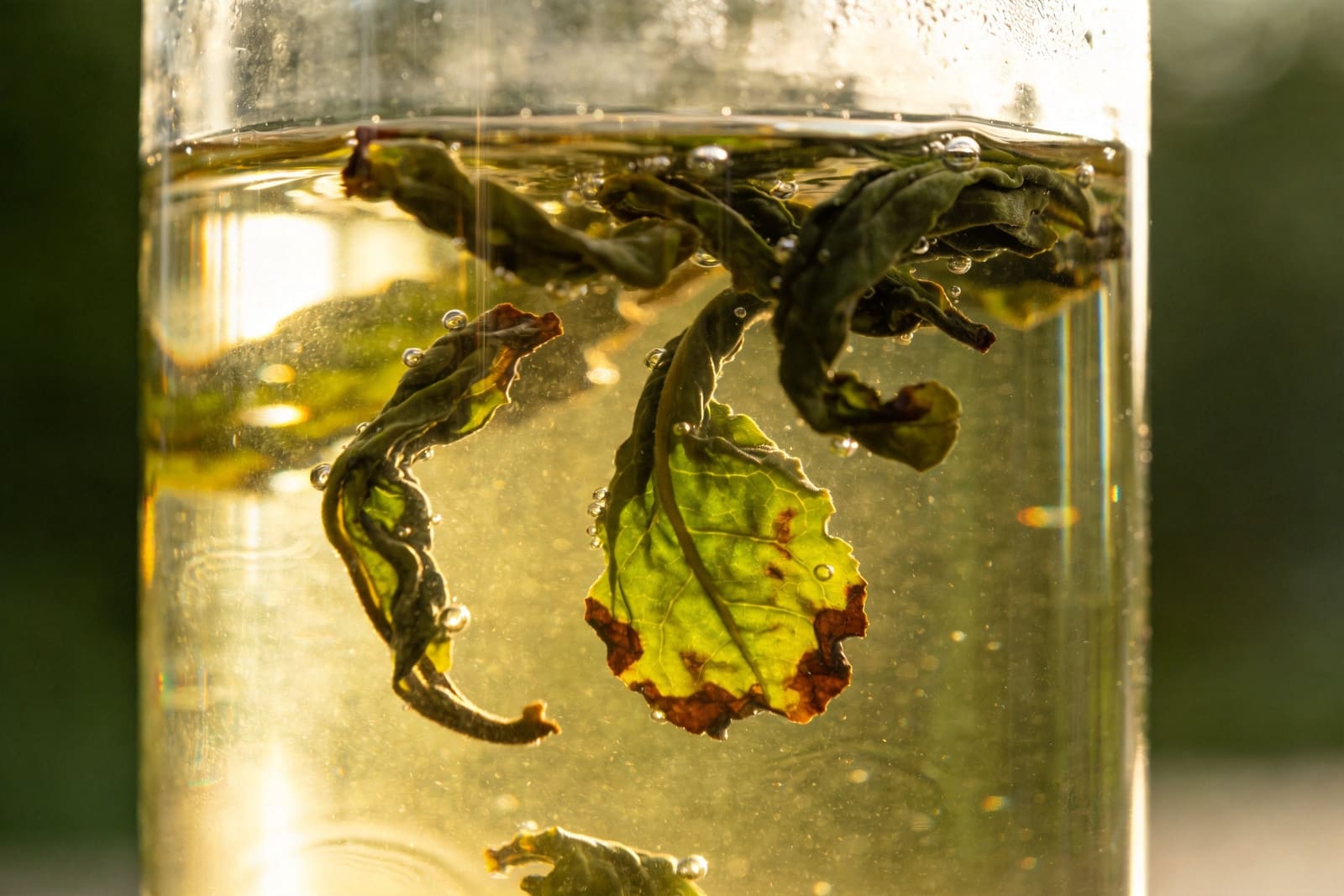
- Turning (yaoqing): Over several hours the leaves are gently shaken or tumbled at intervals, bruising the edges so oxidation begins unevenly and producing the classic red-edged, green-centered leaf.
- Fixation (shaqing): A short, high-heat pan-firing or tumble-roasting kills the enzymes and locks oxidation at the chosen level.
- Rolling: Warm leaves are shaped into long twisted strips (Wuyi style) or tight beads (Anxi and Taiwan styles), which also releases aromatic oils.
- Roasting and drying: A final slow roast dries the leaf; darker styles are roasted longer for caramel and toasted notes, and aged oolongs may be re-roasted over years.
Where the maker stops oxidation is what separates a floral jade oolong from a dark roasted one. Food scientists study the same steps experimentally: a 2023 study in Foods tested red-light withering, controlled turning, brief 290 C drum fixation, low-temperature rolling and microwave drying, and reported better catechin retention than its control process. Those are optimized lab conditions for manufacturers, not the traditional method or a home recipe.
Compounds and Health: What the Evidence Shows
Beyond taste, oolong contains the same broad family of tea polyphenols found in other true teas, along with theasinensins—dimeric flavan-3-ols formed during partial oxidation. Reviews of the scientific literature report that drinking oolong has been associated in small human studies with modest effects on antioxidant markers in blood plasma and, in one short trial, on blood lipids. These findings are encouraging but preliminary, and tea is not a treatment for any disease.
A 2025 laboratory study in Biology found that ethanol extracts of oolong were rich in polyphenols and showed antioxidant activity in test-tube assays, while a computational docking analysis suggested some compounds could interact with cancer-related proteins. This is in vitro and in silico hypothesis-building work: it does not show that drinking oolong prevents or treats cancer in people, and the authors themselves called for further validation.
To protect these delicate compounds and flavors, avoid common tea brewing mistakes that can scorch leaves or over-extract bitter tannins.
Storing Your Oolong Collection
Because oolong spans such a wide range of oxidation and roasting, storing it correctly is vital. Lightly oxidized, unroasted oolongs are best kept in a cool, dark place and consumed within a few months, while heavily roasted or aged oolongs can evolve beautifully over time. For a detailed breakdown on how to maintain your collection, check out our comprehensive guide on how to store tea and if it expires.
Frequently asked questions
Is oolong tea better for you than green or black tea?
No tea is reliably better than another—all true teas share similar polyphenols, and the practical choice is about flavor and caffeine. Partial oxidation leaves oolong with some catechins typical of green tea and some oxidized compounds typical of black tea. Antioxidant measurements vary with the sample and brewing, so the best choice is the unsweetened tea you genuinely enjoy.
Does oolong tea contain caffeine?
Yes, oolong tea naturally contains caffeine, as it is made from the Camellia sinensis plant. The exact amount varies widely based on the cultivar, leaf maturity, and brewing method. Generally, it contains less caffeine than coffee but can have slightly more or less than other true teas depending on how heavily it is roasted and brewed.
How many times can I steep oolong tea?
High-quality oolong tea is famous for its ability to be steeped multiple times. While green or black teas might only yield one or two good infusions, whole-leaf oolongs can often be steeped three to six times. Each subsequent steep reveals different layers of the complex flavor profile, from initial floral notes to deeper finishes.
What is the best water temperature for brewing oolong?
The ideal water temperature depends on the oxidation level of your oolong. Lightly oxidized, green-style oolongs benefit from slightly cooler water around 185°F to 195°F. Darker, heavily roasted, or highly oxidized oolongs require near-boiling water, around 200°F to 212°F, to fully extract their rich, deep flavors without making the brew taste overly bitter or astringent.
Key Takeaways
- Oolong is a partially oxidized tea made from medium to large-leaf Camellia sinensis varieties, bridging the gap between green and black teas.
- Terroir plays a massive role; high-altitude regions like Alishan and Wuyi Mountain produce leaves with enhanced umami, sweetness, and floral monoterpenes.
- Processing techniques, including specific withering, rolling, and roasting methods, dictate whether the tea tastes fresh and green or deep and caramelized.
- Oolong contains polyphenols including theasinensins formed during partial oxidation; lab assays show antioxidant activity, but human evidence for specific benefits is still limited.
Disclaimer: This article is for general informational purposes only and is not a substitute for professional medical advice, diagnosis, or treatment. Always consult a qualified healthcare provider about any health condition or before changing your diet, especially during pregnancy, while nursing, or if you take medication or have caffeine sensitivity.
Comments (0)