Chinese Tea Ceremony: A Beginner's Guide to Gongfu Cha
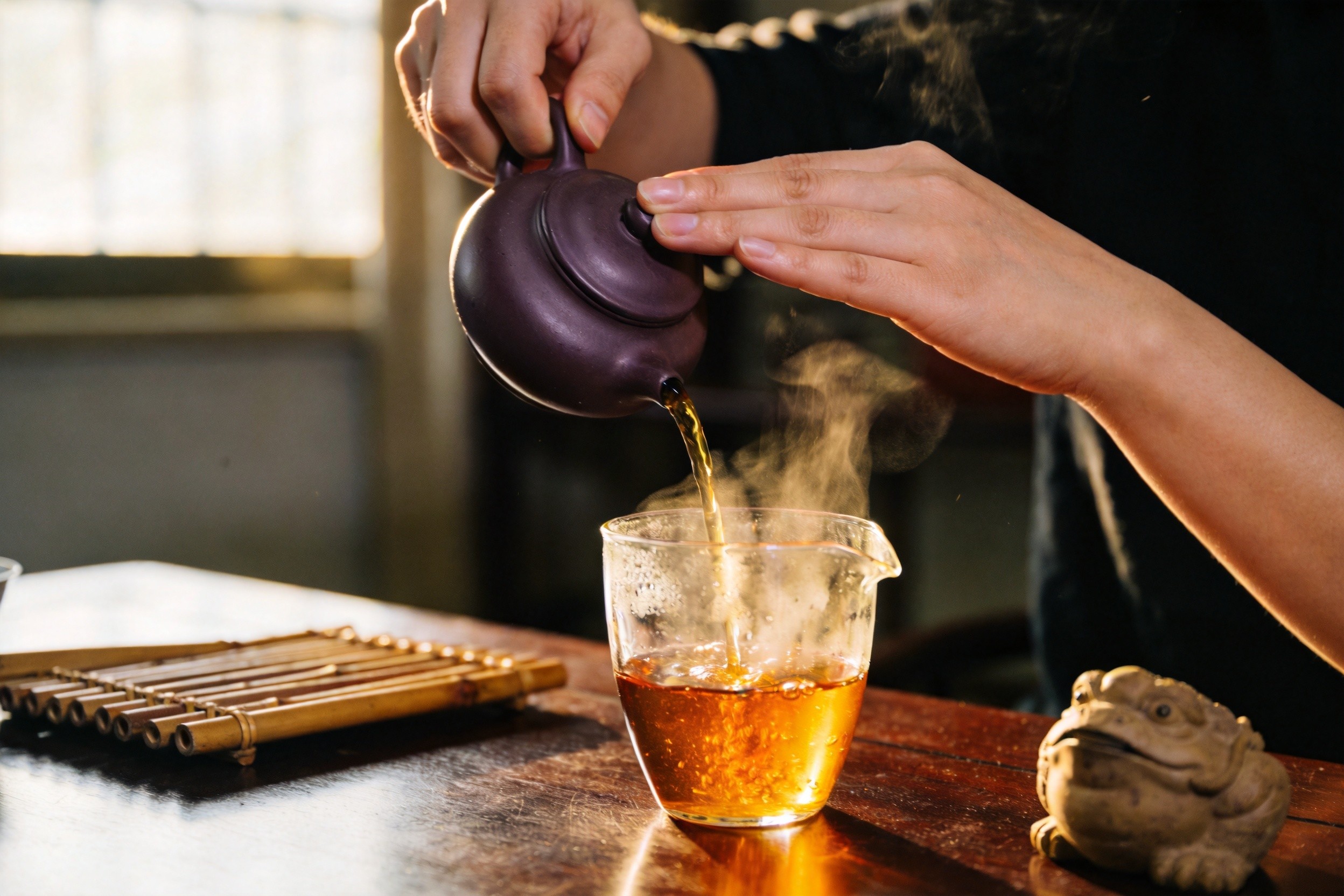
The Chinese tea ceremony, most commonly known as Gongfu Cha (功夫茶, “tea made with skill”), is the traditional Chinese way of preparing tea with small vessels, a high ratio of leaves, and many short infusions. It is not a rigid religious ritual, but a refined method of brewing — wrapped in customs that express care, respect, and attention to the moment. This guide walks through what Gongfu Cha actually is, the ware it uses, the basic steps, and the etiquette that turns making tea into hospitality.
The roots of Chinese tea culture
Tea has been part of Chinese life for well over a thousand years. The Tang dynasty scholar Lu Yu (陆羽, 733–804) codified much of that knowledge in The Classic of Tea (《茶经》), written around the 760s and still considered the foundational text of tea culture. Tea preparation changed dramatically in 1391, when the Ming court ended the tribute of compressed tea cakes and loose-leaf tea became the standard — paving the way for the steeped, whole-leaf brewing we know today. Gongfu Cha itself emerged later, associated particularly with the tea cultures of Fujian and the Chaoshan region of Guangdong, where small pots and oolong tea became the norm.
What Gongfu Cha means
“Gongfu” here refers to skill and patience rather than martial arts. The method is defined by four things:
- Small vessels — a pot or gaiwan of roughly 100–200 ml and tiny tasting cups of 30–50 ml.
- A generous amount of leaf — typically 5–8 grams in a 150 ml vessel, far more than Western-style brewing.
- Short infusions — often measured in seconds rather than minutes, with the leaves re-steeped many times.
- Full attention — temperature, timing, and pouring order are all controlled by the host.
The point is concentration: with lots of leaf and little water, each infusion tastes slightly different, and a good oolong or pu-erh can be enjoyed through half a dozen or more steeps. If you are choosing your first vessel, our comparison of a gaiwan and a teapot is the natural starting point — a gaiwan is the most versatile and affordable way in.
The essential tea ware
A full tray looks elaborate, but the core kit is simple.
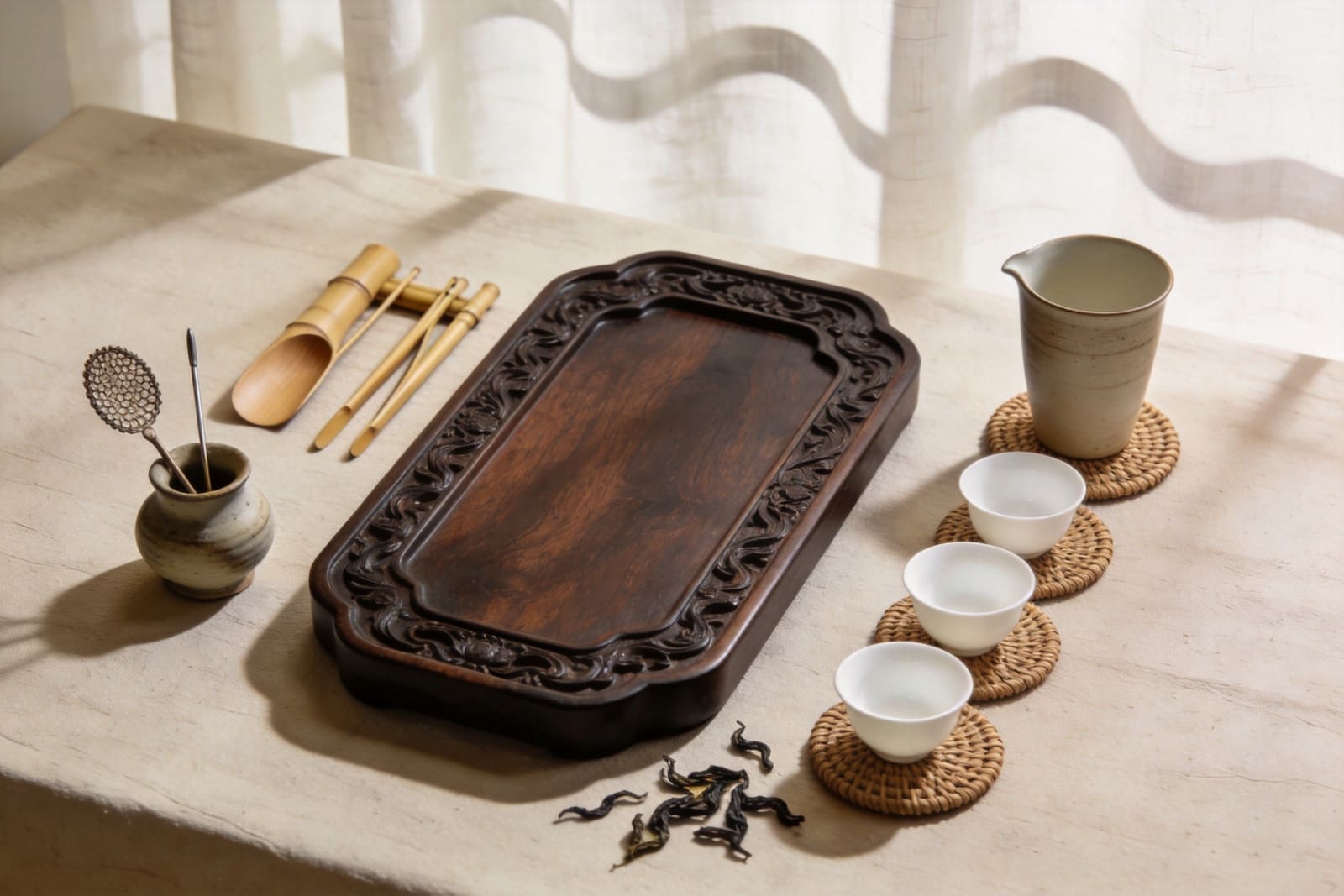
- Tea tray (茶盘, chapan): a slotted wooden or stone tray that catches rinse water and spills.
- Brewing vessel: a small Yixing clay teapot (紫砂壶) or a porcelain gaiwan. Clay pots are porous and are traditionally seasoned for one type of tea; a glazed gaiwan is neutral and works with any tea.
- Fairness pitcher (公道杯, gong dao bei): a jug the tea is decanted into before serving, so every guest receives liquor of equal strength — the name literally means “fairness cup.”
- Tasting cups and aroma cups: tiny cups for drinking, sometimes paired with tall slender cups used first to appreciate the aroma.
- Tea tools (茶道六君子): bamboo scoop, tongs, needle, and a funnel for handling leaves and cups.
- Kettle: with a steady, narrow spout for pouring accurately.
A simplified step-by-step ceremony
You do not need a masterclass to brew this way at home. The basic sequence runs as follows.
- Warm the ware. Pour boiling water into the pot or gaiwan, the fairness pitcher, and the cups, then discard it onto the tray. This preheats everything so the brewing temperature stays stable.
- Add the leaves. Around 5–8 g of tea for a 150 ml vessel — about a third to a half full for rolled oolong, since the leaves expand greatly.
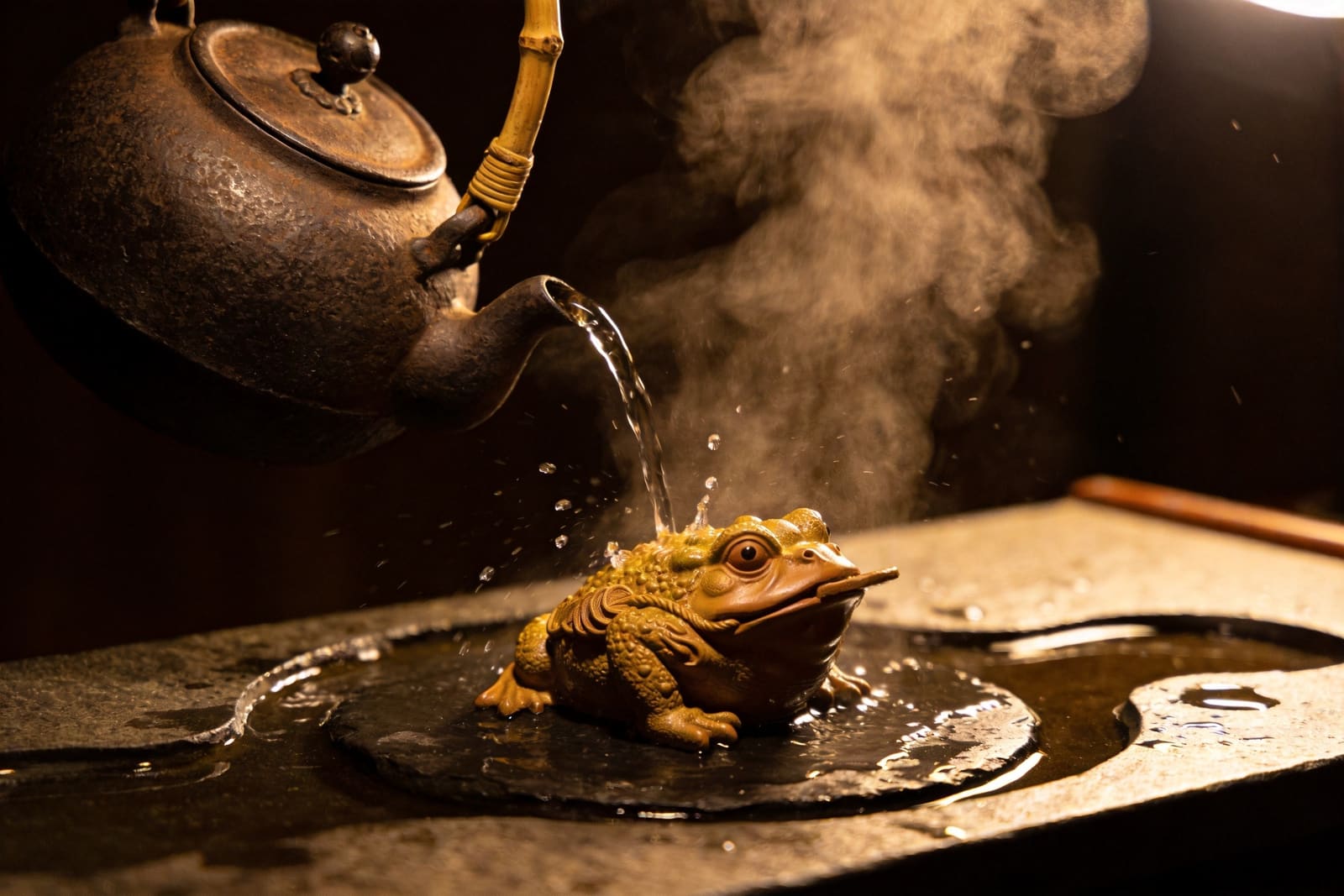
- Rinse the leaves. Pour hot water over the leaves and pour it off almost immediately, usually over the cups or a tea pet. The rinse “wakes” tightly rolled leaves and washes away dust, especially from aged pu-erh.
- Infuse in short rounds. Add water at the right temperature for the tea — around 85–95 °C (185–205 °F) for most oolongs, near 100 °C (212 °F) for black tea and pu-erh, and cooler for green and white teas. Start at around 20–30 seconds for the first drinking infusion and add a few seconds each round.
- Decant fully. Pour every drop into the fairness pitcher so the leaves stop extracting; then distribute the tea evenly among the cups.
- Repeat. Re-steep the same leaves, tasting how the aroma shifts from floral to fruity, honeyed, or roasted.
For a full temperature-and-timing chart, see our guide to the most common tea brewing mistakes — the same principles apply, just at a smaller scale.
Tea etiquette: respect made visible
Much of what visitors call “ceremony” is simply good hosting expressed through gesture.
- Serving order: tea is poured for elders and guests first, and the host last. This order is central to the Chinese wedding tea ceremony, where the couple serves tea to their elders as a sign of gratitude and respect.
- The finger tap: when someone pours for you, lightly tapping two bent fingers on the table is a quiet way of saying thank you. The custom is popularly traced to a Qing dynasty legend in which a servant, traveling incognito with his emperor, mimed a bow with his fingers so as not to reveal the ruler’s identity.
- Filling cups: cups are poured only about seven-tenths full, following the saying that the remaining three parts are filled with friendship and affection (the full saying contrasts tea with wine, which is customarily poured fuller).
- Receiving tea: accept a cup with thanks — traditionally with both hands when an elder or host is serving you — and never turn the cup away or refuse without a polite word.
Experiencing it in China
Tea houses across China range from neighborhood venues where locals play cards over a pot to refined tea rooms offering a guided tasting. In major cities, an hour or two at a dedicated tea house commonly costs somewhere in the region of ¥80–300 per person depending on the city and the tea chosen; tea-growing regions such as Fujian and Yunnan also offer visits to tea farms and masters’ studios. Treat the price as a rough guide rather than a fixed rule.
Frequently asked questions
What is the difference between Gongfu Cha and the Japanese tea ceremony?
Gongfu Cha is the Chinese tradition of skillfully brewing loose-leaf tea — usually oolong, black, or pu-erh — in small vessels for many infusions, and it is practiced in everyday hospitality. The Japanese tea ceremony, chado, is a more formalized, codified ritual centered on preparing powdered matcha in a tatami tea room. Both value mindfulness and respect, but they are distinct traditions.
What teas are best for Gongfu Cha?
Partially oxidized oolongs (such as Tieguanyin and Da Hong Pao), aged pu-erh, and other dark teas are the classics, because their tightly rolled or compressed leaves unfurl over many short infusions. Good black and white teas also work; delicate green teas are generally better brewed more gently in a larger vessel.
Why are the cups so small?
Small cups keep the liquor at the right drinking temperature and let guests taste the tea freshly decanted, infusion by infusion, rather than letting a large cup cool and over-steep. The small format also makes each round a shared moment rather than an individual drink.
Why is the first infusion poured away?
The first hot-water rinse is discarded to wake tightly rolled or compressed leaves, rinse off dust, and warm the ware. It is standard for oolong and pu-erh; for delicate green or white teas, the first infusion is often kept, since it is already one of the best.
Key takeaways
- Gongfu Cha is the Chinese method of brewing tea with small vessels, plenty of leaf, and many short infusions — “gongfu” means doing it with skill.
- The core kit is a tray, a small pot or gaiwan, a fairness pitcher, tiny cups, tea tools, and a kettle.
- The steps follow a calm rhythm: warm, dose, rinse, infuse briefly, decant fully, and repeat.
- Etiquette expresses respect: elders and guests first, a finger tap for thanks, cups filled only seven-tenths, and the host serves themselves last.
Have you tried Gongfu Cha at home or in a Chinese tea house? Tell us which tea performed best over many steeps in the comments below.
Comments (0)