How to Read Tea Packaging Grades: A Tea Buyer's Guide
Tea packaging is covered in letters, numbers and Chinese characters that look important but rarely explain themselves. Here is the short version: those codes mostly describe leaf size and style, not a universal quality score, while the packaging itself tells you how well the tea has been protected. Once you can read both, choosing between tins becomes much easier.
This guide covers the grading terms you will actually see on shelves—from Orange Pekoe to CTC, and from Chinese grade characters to the latest packaging rules—so you can judge a product by what matters rather than by its price tag.
What the grading letters actually mean
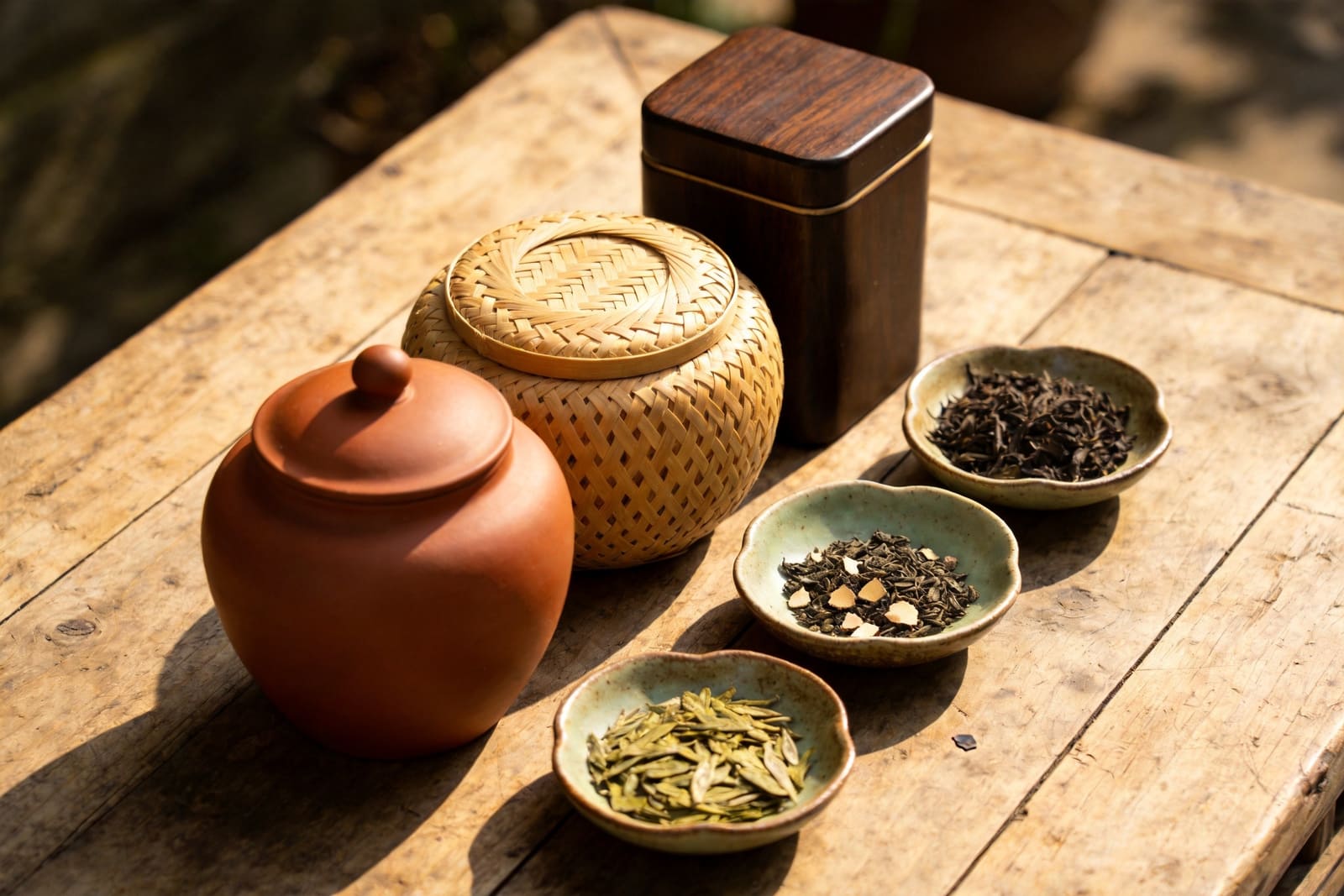
The most common letter grades come from the traditional orthodox black tea system, originally developed for the colonial tea trade. They classify the size and appearance of the processed leaf, not its flavor or origin:
- OP (Orange Pekoe) — whole, wiry leaves without tips. Despite the name, there is no orange in it; “pekoe” refers to the fine down on young buds, while “orange” is usually traced to the historic Dutch House of Orange-Nassau.
- FOP (Flowery Orange Pekoe) — OP with some young leaf tips.
- TGFOP / FTGFOP — add “Tippy,” “Golden” and “Finest” for progressively more golden tips.
- B, F, D (Broken, Fannings, Dust) — smaller leaf particles, which infuse faster and stronger.
Two things matter more than memorizing the alphabet. First, these grades apply mainly to Indian and Sri Lankan-style black teas; Chinese, Japanese and most oolong or white teas use completely different naming. Second, a higher-sounding grade does not guarantee better taste—growing region, cultivar, plucking date and craftsmanship all matter more than the letters. The youngest leaves and buds (the “tips”) generally command premium prices, but a well-made broken-leaf Assam can outshine a tired whole-leaf tea any day.
Whole leaf, broken leaf and CTC
A separate description tells you how the leaf was processed:
表格
| Term | What it is | What it’s like in the cup |
|---|---|---|
| Whole leaf (orthodox) | Rolled, largely intact leaves | Lighter, more layered; usually lasts several infusions |
| Broken leaf | Whole leaves cut into smaller pieces | Faster, stronger extraction; common in strong breakfast blends |
| Fannings / dust | Very small particles | Very fast, robust brew; the standard fill for most everyday tea bags |
| CTC (Crush–Tear–Curl) | Leaves machine-processed into hard pellets | Bold, dark, quick—built to stand up to milk and sugar |
CTC dominates the commodity tea-bag market because it brews in under a minute and produces a consistently strong, tannic cup, but the trade-off is the subtlety and multi-steep potential of whole leaves. If a package simply says “premium” or “finest” without naming leaf style or grade, that is marketing language, not a standard.
What good packaging should do
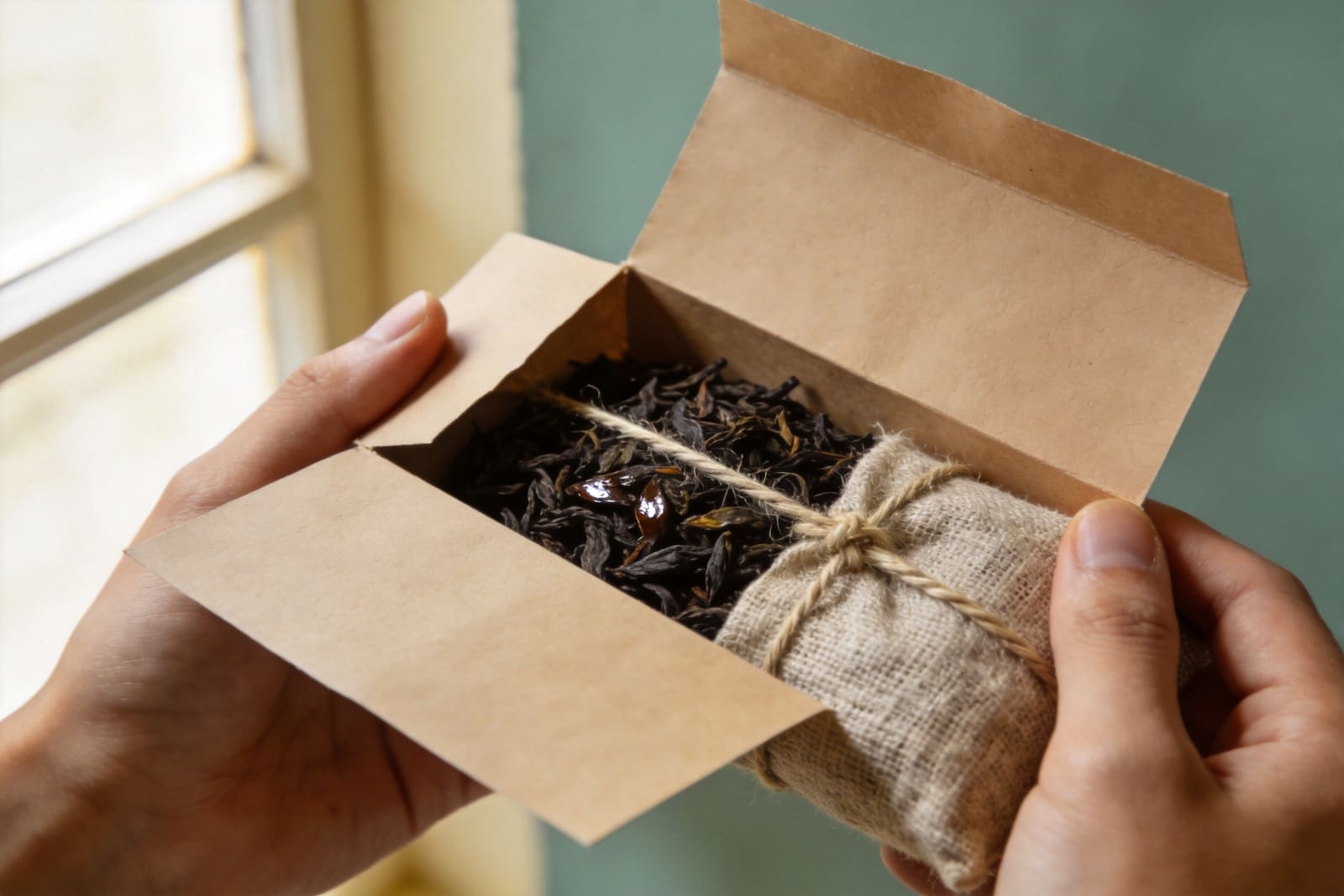
Tea is shelf-stable but not indestructible. Four things damage it: oxygen, moisture, light and strong odors—tea leaves absorb surrounding smells very readily. Sensible packaging is designed around those four threats, so look for:
- An airtight, resealable closure—foil-lined stand-up pouches with zip seals, or metal tins with tight-fitting lids.
- Opaque or UV-protective material—clear display jars look attractive in a shop but let light slowly stale the leaves.
- A foil inner bag inside paper boxes or wooden caddies; decorative outer packaging alone does almost nothing for freshness.
- Sized to your drinking pace—buy smaller packs of delicate green or white tea, and larger tins only for teas you drink daily or for compressed pu-erh, which is intended for long storage.
Once a tin is open, transfer it to an airtight container away from the stove, window and spice rack; our tea storage guide walks through how long each type actually keeps. Be wary of elaborate multi-layer gift boxes: they often signal that you are paying for packaging rather than leaf.
Reading Chinese tea labels
Chinese teas are graded differently, usually with descriptive category names rather than letter codes. A few pointers help enormously:
- Grade characters. You may see 特级 (tèjí, special grade) , 一级 (yījí, grade 1) and 二级 (èrjí, grade 2) . These are quality grades defined within each product’s standard, not a ranking across different teas.
- Geographical-indication (GI) products. Famous regional teas carry a national GI standard. For example, Wuyi rock tea (武夷岩茶) is governed by standard GB/T 18745 and is divided into categories such as Dahongpao (大红袍), Rougui (肉桂), Shuixian (水仙), Mingcong (名枞) and Qizhong (奇种). Dahongpao, Rougui and Shuixian are graded special to grade 2 or 3, while Mingcong carries no grade at all—so a “graded Mingcong” label is a small red flag.
- The standard number. Labels often cite the standard they follow (such as GB/T 18745 for Wuyi rock tea). Seeing a real standard number is a good sign; vague labels with no producer, origin or date are not.
If you buy tea produced or sold in mainland China, there is also a packaging rule worth knowing about. The mandatory national standard GB 23350—2021 restricts excessive packaging for food, and its Amendment No. 2 (issued March 2025) tightened the tea-specific requirements: tea packaging may use no more than three layers, packaging materials may not include precious metals or hongmu (rosewood), and packaging cost is capped at 15% of the selling price for tea above RMB 200 and 20% for other products. Enforcement cases publicized by the State Administration for Market Regulation show retailers fined for oversized, mostly-empty gift boxes—so an enormous tin containing a tiny canister is not just wasteful, it is non-compliant in its home market.
A practical checklist before you buy
- Identify the leaf style—whole leaf, broken, fannings or CTC—and pick what suits how you brew.
- Decode the grade letters, then discount them—use them to read style, not quality; trust origin, harvest date and a reputable seller instead.
- Inspect the packaging—airtight, opaque, foil-lined, and reasonably sized for the amount of tea.
- On Chinese teas, check for a category name, grade character, origin and standard number; treat anonymous gift boxes with suspicion.
- Prefer transparency—sellers who show the dry leaf, name the harvest season and can answer questions about region are generally safer than brands selling only atmosphere.
Understanding the six true tea families will make all of this even easier, since the right packaging expectations differ between delicate white tea and aging pu-erh.
Frequently Asked Questions
**Does “Orange Pekoe” mean the tea has orange flavor?**No. Orange Pekoe (OP) is a whole-leaf size grade in the orthodox black tea system and contains no orange fruit or flavoring. “Pekoe” refers to the down on young buds, and “orange” is historically linked to the Dutch House of Orange-Nassau.
**Do the grade letters tell me which tea is best?**Not directly. They describe leaf size and the proportion of golden tips, mostly for Indian and Sri Lankan-style black teas. A TGFOP is not automatically better than an OP—origin, cultivar, freshness and how the tea was made decide the flavor.
**What is the difference between CTC and orthodox tea?**Orthodox tea is rolled to keep leaves largely whole or broken, giving layered flavor and multiple infusions. CTC (Crush–Tear–Curl) machine-processes leaves into small pellets that brew fast and strong, typically for milk teas and most everyday tea bags.
**How do I read the grade on Chinese tea packaging?**Look for category names and characters such as 特级 (special grade), 一级 (grade 1) and 二级 (grade 2). Famous regional teas may also cite a geographical-indication standard number—for example GB/T 18745 for Wuyi rock tea. Note that some categories, such as Mingcong rock tea, are officially ungraded.
**How many layers of tea packaging are allowed in China?**Under the GB 23350—2021 mandatory standard and its 2025 Amendment No. 2, tea sold in mainland China may have no more than three packaging layers, may not use precious metals or rosewood, and packaging cost is capped at 15% of the selling price for tea above RMB 200 (20% otherwise).
**What is the best packaging for keeping tea fresh?**An airtight, opaque, foil-lined pouch or metal tin with a resealable seal, stored in a cool, dark, odor-free place. Avoid clear jars and decorative boxes without an inner foil bag, and buy delicate green and white teas in smaller quantities.
Key Takeaways
- Grading letters (OP, FOP, TGFOP and friends) describe leaf size and tips, not a universal quality ranking, and mainly apply to Indian/Sri Lankan-style black teas.
- Whole leaf, broken, fannings and CTC describe processing and brewing style—choose by how you drink your tea, not by prestige.
- Good packaging protects against oxygen, moisture, light and odor; favor airtight, opaque, foil-lined containers.
- Chinese teas use category names, grade characters (特级/一级/二级), origin and standard numbers—some GI categories, like Mingcong rock tea, carry no grade at all.
- Mainland China’s current GB 23350—2021 Amendment No. 2 (2025) limits tea packaging to three layers and caps packaging cost at 15% above RMB 200.
Comments (0)